Table of Contents
Key Features of the Agriculture Gasoline Powered Remote Control Crawler
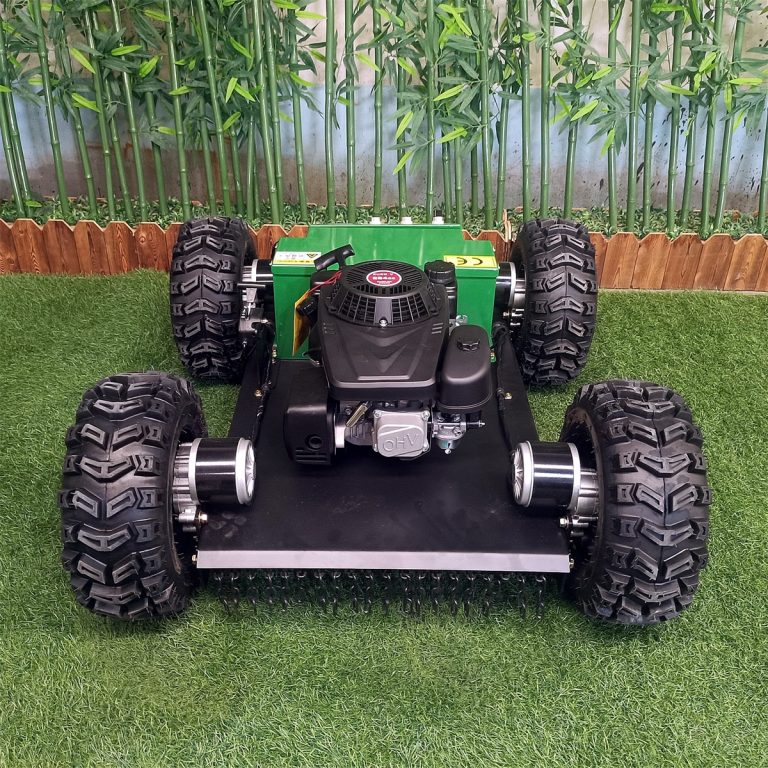
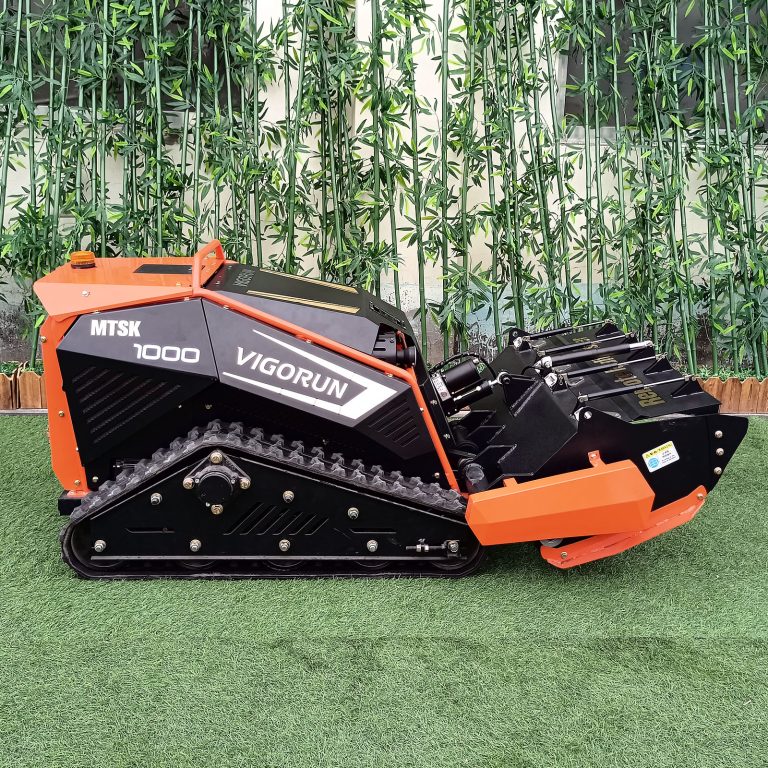
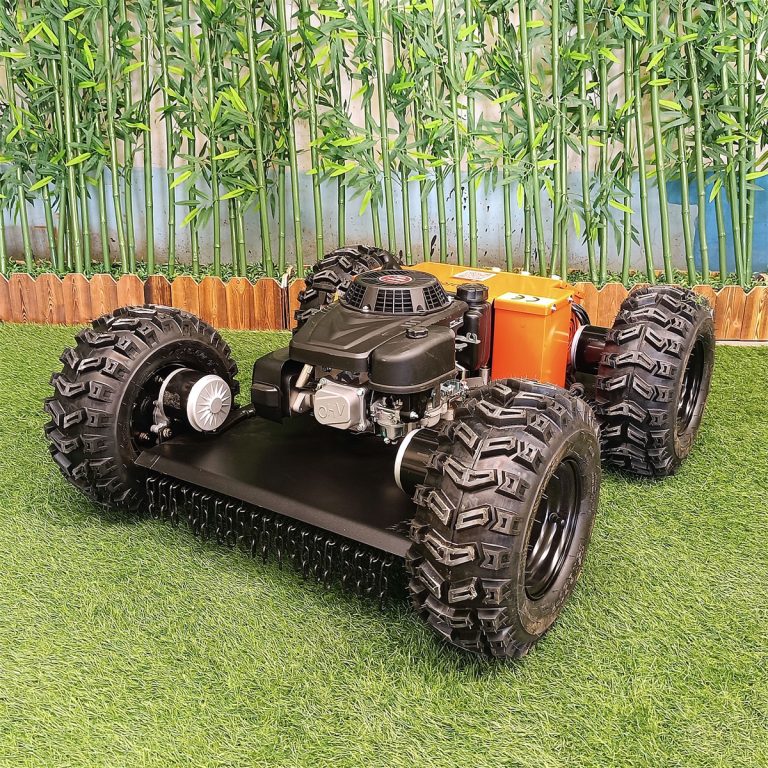
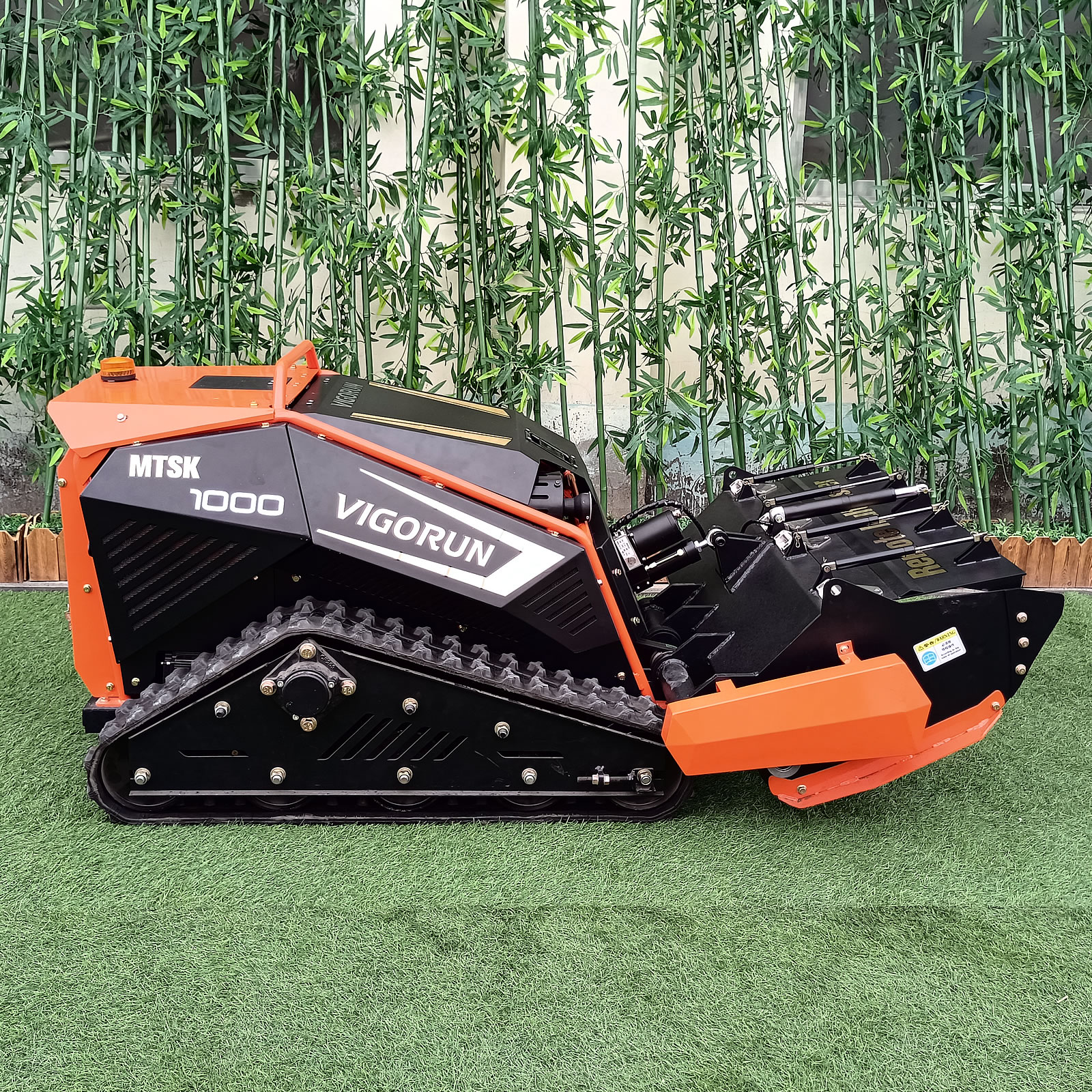
 The agriculture gasoline powered remote control distance 100m crawler remote controlled flail mulcher is a remarkable innovation in the agricultural machinery sector. It is equipped with a V-type twin-cylinder gasoline engine, specifically the Loncin brand model LC2V80FD. This engine boasts a rated power of 18 kW at 3600 rpm, ensuring robust performance for various agricultural tasks.
 Additionally, the agriculture gasoline powered remote control distance 100m crawler remote controlled flail mulcher incorporates a high reduction ratio worm gear reducer. This component multiplies the torque output from the servo motors, allowing the machine to tackle steep climbs with ease. Even in a power-off state, the mechanical self-locking mechanism ensures that the machine stays stationary, enhancing operational safety during use.
Versatility and Efficiency in Agricultural Operations
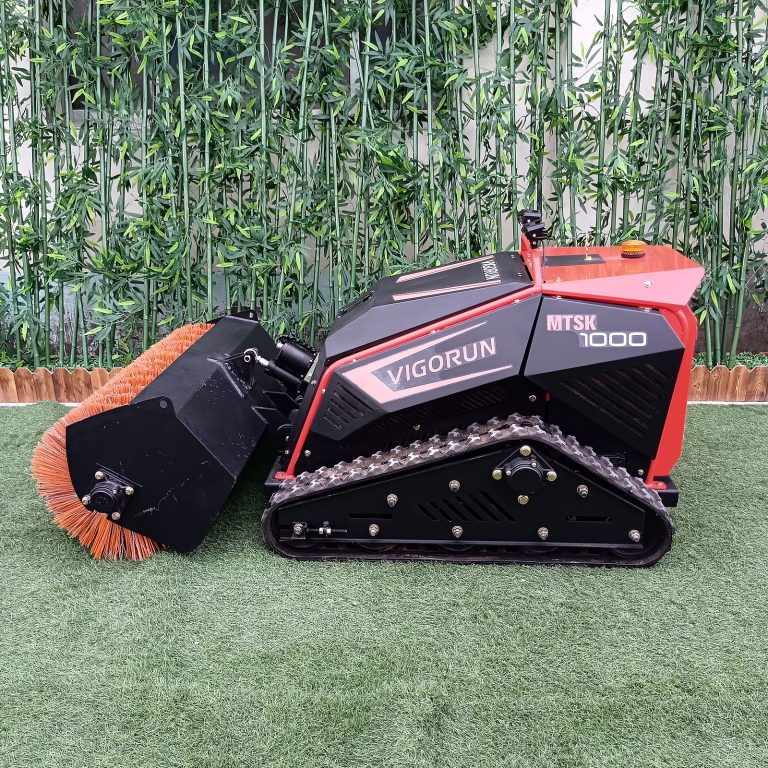
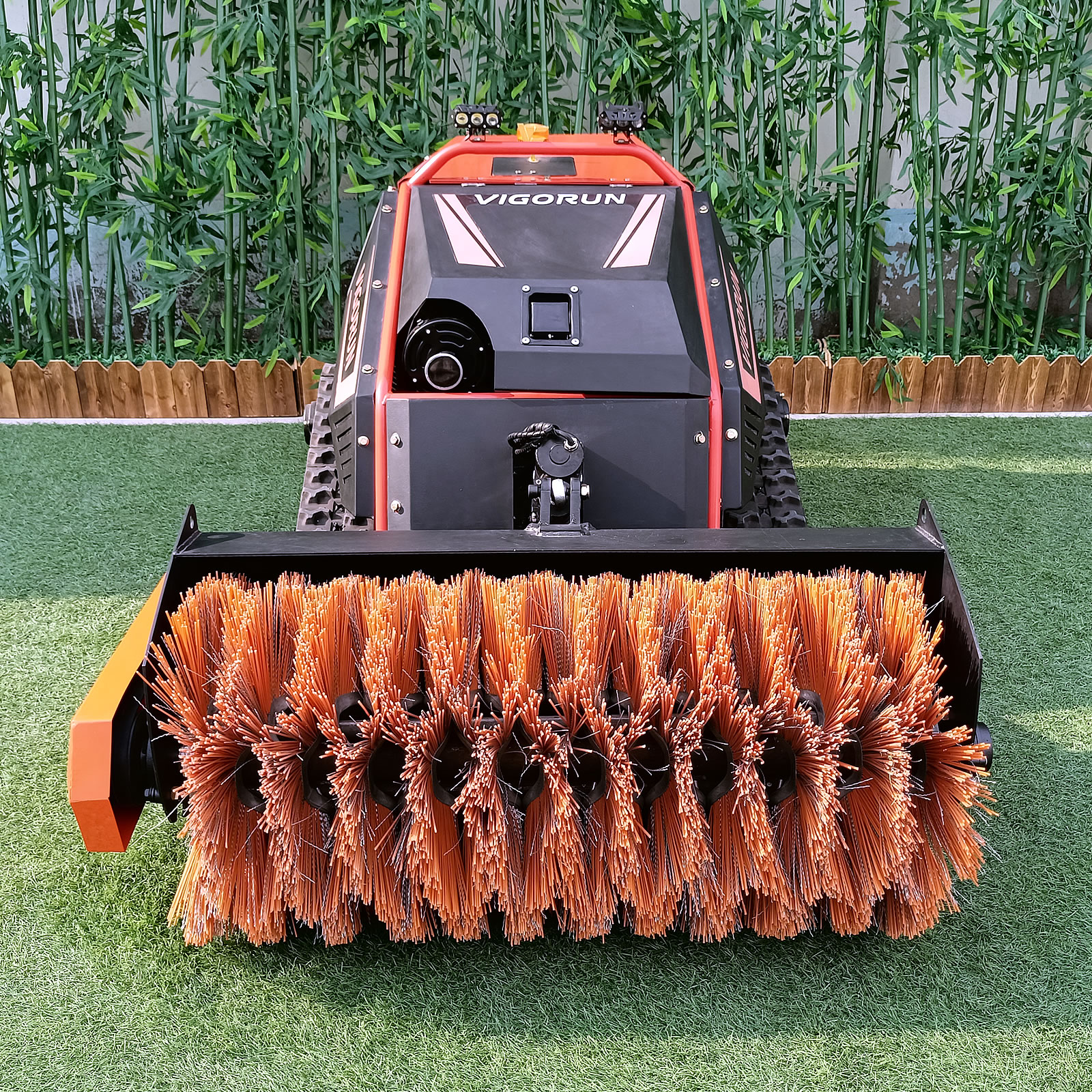
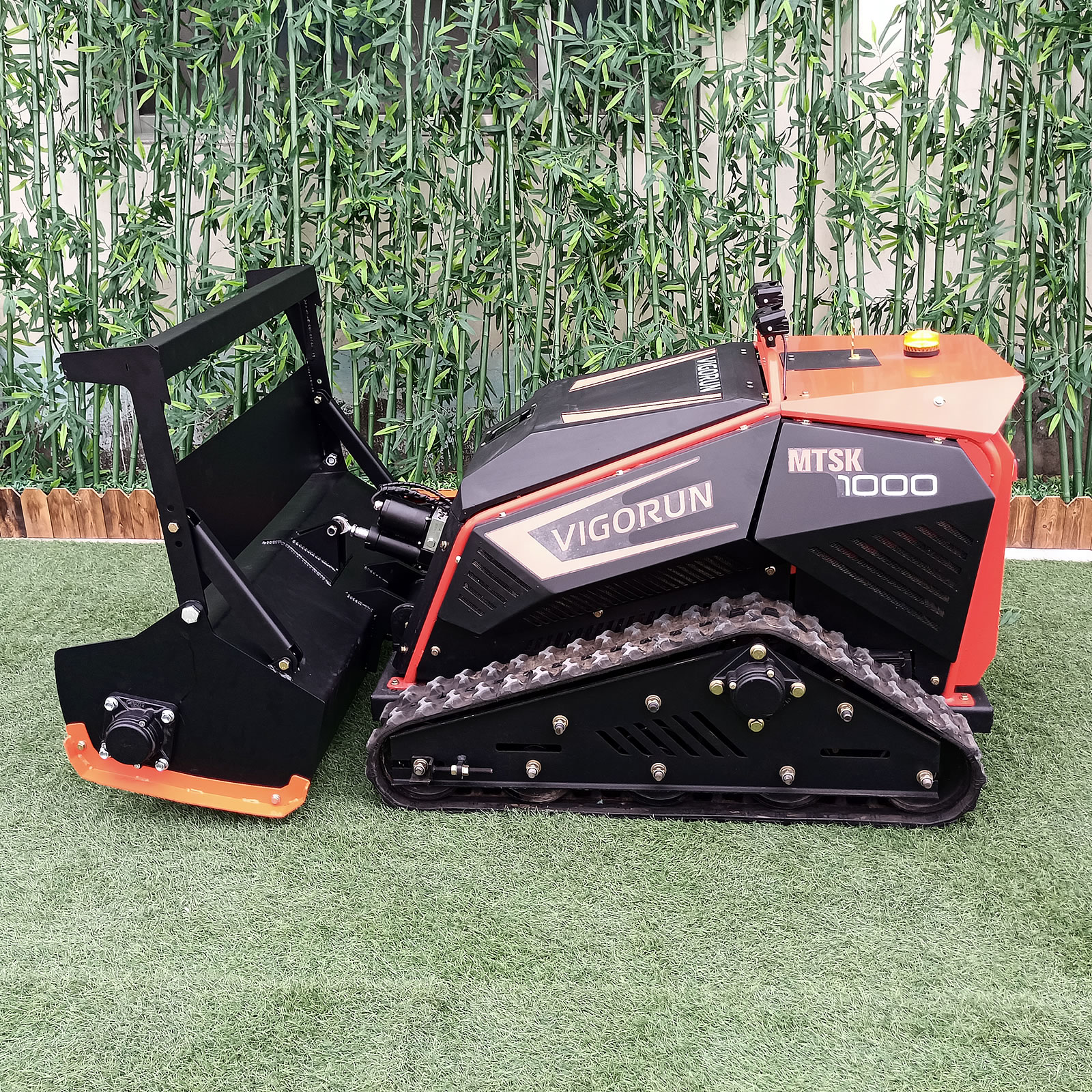
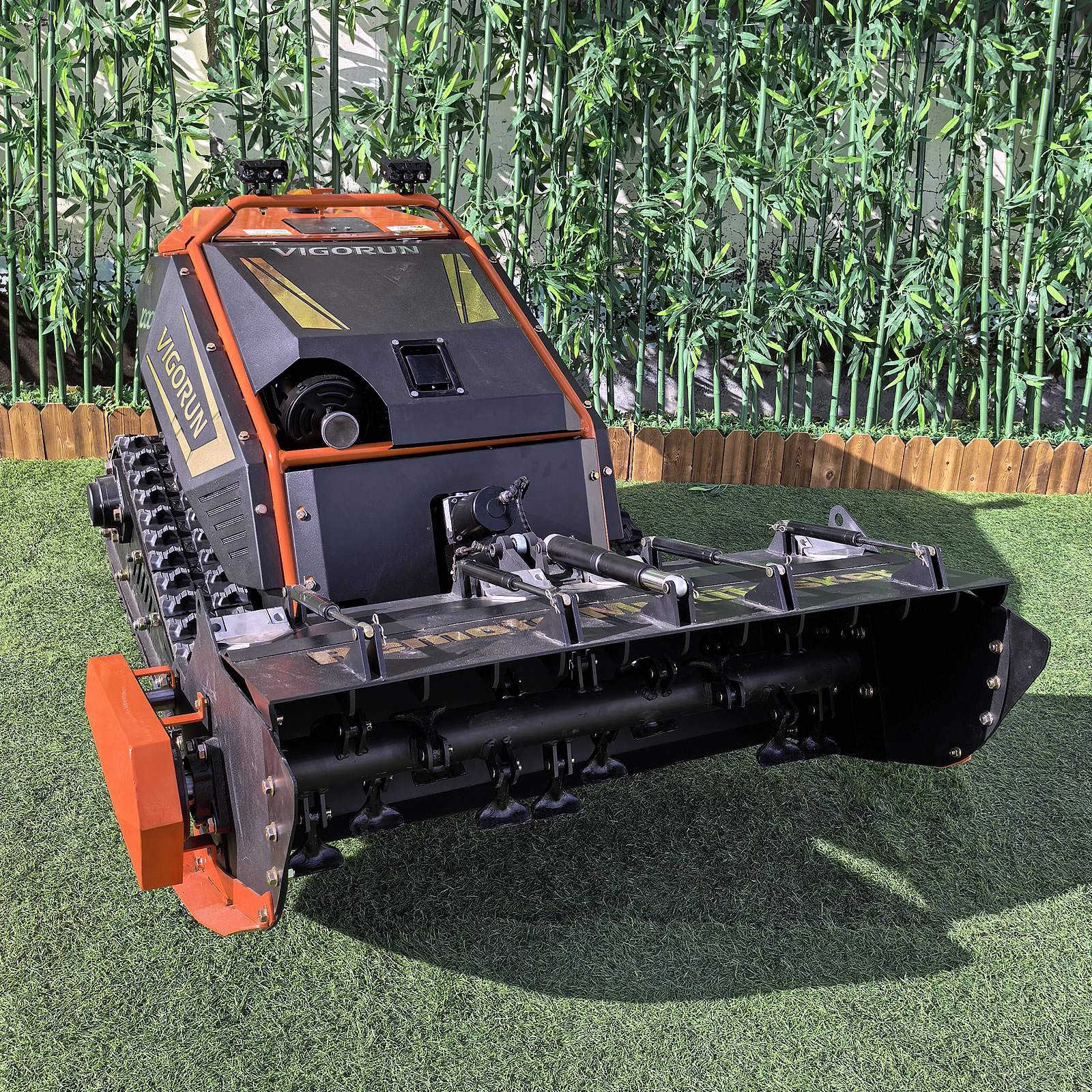
One of the standout features of the agriculture gasoline powered remote control distance 100m crawler remote controlled flail mulcher is its versatility. Designed for multifunctional use, it can be fitted with various front attachments, including a 1000mm-wide flail mower, hammer flail, forest mulcher, angle snow plow, or snow brush. This adaptability makes it an excellent choice for heavy-duty grass cutting, shrub and bush clearing, vegetation management, and snow removal.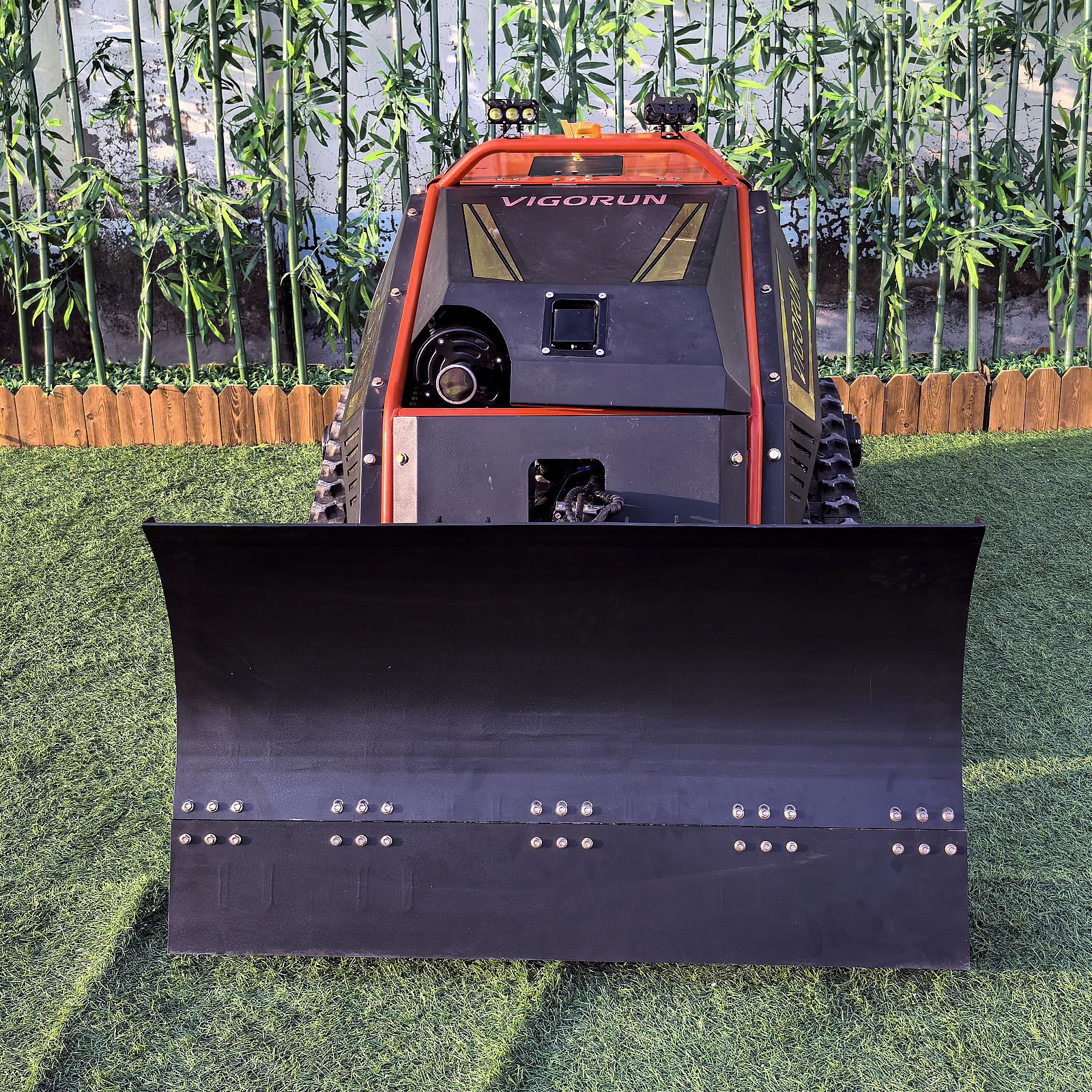
 The intelligent servo controller plays a crucial role in the efficiency of the machine. It precisely regulates motor speed and synchronizes the left and right tracks, allowing for smooth straight-line travel without constant adjustments. This feature significantly reduces the operator’s workload and minimizes the risks associated with overcorrection, especially on steep slopes.
Moreover, the agriculture gasoline powered remote control distance 100m crawler remote controlled flail mulcher is designed with a 48V power configuration, which offers advantages over many competing models that use lower voltage systems. The higher voltage reduces current flow and heat generation, enabling longer continuous operation while mitigating overheating risks. This ensures consistent performance even during demanding tasks, making it an ideal choice for professionals in the agricultural field.
The intelligent servo controller plays a crucial role in the efficiency of the machine. It precisely regulates motor speed and synchronizes the left and right tracks, allowing for smooth straight-line travel without constant adjustments. This feature significantly reduces the operator’s workload and minimizes the risks associated with overcorrection, especially on steep slopes.
Moreover, the agriculture gasoline powered remote control distance 100m crawler remote controlled flail mulcher is designed with a 48V power configuration, which offers advantages over many competing models that use lower voltage systems. The higher voltage reduces current flow and heat generation, enabling longer continuous operation while mitigating overheating risks. This ensures consistent performance even during demanding tasks, making it an ideal choice for professionals in the agricultural field.